

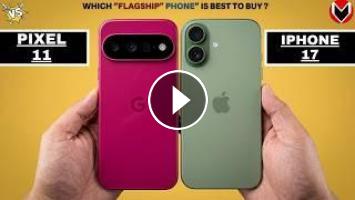
Pixel 11 vs iPhone 17
#pixel11
#iphone17
#iphone
#pixel
The **Google Pixel 11** and **Apple iPhone 17** are two premium compact flagship smartphones, but they focus on different strengths. The **Pixel 11** is expected to emphasize AI-powered photography, Google's clean Android experience, and advanced on-device artificial intelligence, while the **iPhone 17** focuses on top-tier performance, seamless Apple ecosystem integration, premium build quality, and long-term software optimization. Since the Pixel 11 has not yet been officially announced, some of its specifications below are based on recent leaks and rumors, while the iPhone 17 specifications are official. ([PhoneArena][1])
On the display front, both smartphones are expected to feature a **6.3-inch OLED panel** with a **120Hz adaptive refresh rate**. The Pixel 11 is rumored to retain a Full HD+ OLED display with HDR support and approximately **3,000 nits** peak brightness. The iPhone 17 offers a **6.3-inch Super Retina XDR OLED display** with **2622 × 1206 resolution**, **ProMotion 120Hz**, Always-On Display, Dynamic Island, HDR support, True Tone, and up to **3,000 nits** outdoor peak brightness. Apple's display also features Ceramic Shield 2 protection and an anti-reflective coating. ([Apple][2])
Performance is another major difference. The Pixel 11 is expected to be powered by Google's new **Tensor G6** processor paired with **12GB RAM** and at least **256GB storage** in some configurations. Tensor chips prioritize AI processing, voice recognition, image processing, and machine learning rather than benchmark numbers. The iPhone 17 is powered by Apple's **A19 chipset**, featuring a 6-core CPU, 5-core GPU, and 16-core Neural Engine, delivering significantly higher CPU and GPU performance while maintaining excellent power efficiency. The iPhone remains the better choice for gaming, professional video editing, and demanding applications, whereas the Pixel excels in AI-driven daily tasks. ([Apple][2])
Camera performance highlights the biggest philosophical difference between these phones. The Pixel 11 is expected to continue Google's computational photography approach with a powerful AI-enhanced camera system, delivering outstanding HDR, Night Sight, portrait photography, Magic Editor, Best Take, and advanced image processing. The iPhone 17 features a **48MP Fusion main camera** alongside a **48MP Ultra Wide camera**, offering 2x optical-quality zoom, Smart HDR 5, Photonic Engine, Deep Fusion, Night Mode, Cinematic video, Dolby Vision recording, and professional-grade video stabilization. While the Pixel generally produces more natural HDR images and excels in computational photography, the iPhone continues to lead in video recording quality, color consistency, and professional content creation. ([Apple][2])
Battery life is expected to be competitive on both devices. The Pixel 11 is rumored to offer a battery around the **5,000mAh** range with faster charging than previous Pixel models, while the iPhone 17 uses Apple's highly optimized battery system with the A19 chip to provide excellent real-world endurance despite a smaller battery capacity. Apple's software optimization often allows the iPhone to match or exceed Android competitors in daily battery performance. ([PhoneArena][1])
Software is another key distinction. The Pixel 11 is expected to launch with **Android 17** and receive **7 years of Android OS and security updates**, offering Google's latest AI features, Pixel-exclusive tools, Call Screen, Live Translate, Circle to Search, and the cleanest Android experience. The iPhone 17 runs **iOS** with Apple Intelligence, providing deep ecosystem integration with Mac, iPad, Apple Watch, AirPods, and long-term software support that typically extends well beyond six years. ([PhoneArena][1])
In terms of design and durability, both phones are expected to feature premium glass and aluminum construction with **IP68 water and dust resistance**. The Pixel retains its recognizable horizontal camera bar, while the iPhone 17 continues Apple's flat-edge design with Ceramic Shield 2 and refined premium finish. ([Apple][2])
Overall, the **Google Pixel 11** is likely to be the better option for users who prioritize AI-powered features, computational photography, Google's software experience, and intelligent Android capabilities. The **iPhone 17** is the stronger choice for users seeking the fastest overall performance, industry-leading video recording, excellent battery optimization, premium hardware quality, and seamless integration with the Apple ecosystem. If photography and AI are your priorities, the Pixel 11 is expected to stand out, whereas the iPhone 17 remains the more balanced flagship for performance, video creation, and long-term reliability.
- Категория
- AI Видео
Выполните вход или зарегистрируйтесь для отправки комментария.
Комментариев нет.
Следующее
Auto
-
09:48

NVIDIA PiD: Not an Upscaler? Pixel Diffusion Decoder Explained
-
00:15
Girl amazing performance #shorts #performance #circus #viralvideo
-
05:22
Stable Diffusion Hoạt Động Thế Nào? Bí Mật Nằm Ở Đây!
-
51:08
NGƯỜI VIỆT GÓP SỨC XÂY DỰNG GROK-3: Hành Trình Từ Huy Chương IMO Đến ĐỈNH CAO AI Thế Giới
-
00:22
AI pixel art sprite sheet generator #pixelart #gamedev
-
01:41
⚡️КРУТАЯ АВТОМАТИЗАЦИЯ IPHONE ДЛЯ АВТОМОБИЛИСТОВ⚡️ #iphone #iphone17 #iphone16
-
23:14
PiD (Pixel Diffusion Decoder) - модель для х4 апскейла с сохранением деталей. Локально в ComfyUI
-
2 Robot Có Thể Thay Thế Toàn Bộ Nhân Viên Giữ Xe?
-
03:06
Stable Diffusion Tạo Ảnh Như Thế Nào? Giải Mã 50 Bước Từ Một Seed!
-
00:19
MÌNH THAY THẾ ĐỐNG DÂY DUPONT BẰNG BREADBOARD #huyaiautomation
-
13:39

Best AI Tools For Research in 2026 (Beats ChatGPT & 0% Detection)
-
00:37

3 AI tools for programmers
-
00:55

The Best AI Tools For Content Creators
-
00:58

7 AI tools you NEED to try!
-
00:12

Best AI Tools For Hacker
-
11:15

10 Best AI Tools You MUST Try in 2025
-
00:28

The most popular AI tools right now... which one is best?
-
00:36
Best Free AI Tools for Research Papers & Essays | Write Smarter!
-
14:34
Google's NEW AI Tools Will BLOW YOUR MIND | Google I/O 2026
-
00:18

Best FREE AI Tools for Designers | Boost Your Creativity #ai #aitools #graphicdesign #designer
 Загрузка...